
A whole GPU, yours until you stop it
A pod is a container with a dedicated, non-virtualized GPU and its own vCPU, RAM and disk. You compose the shape; a scoring engine finds a host that can actually serve it. Billed in one-minute intervals, with no minimum and no commitment.
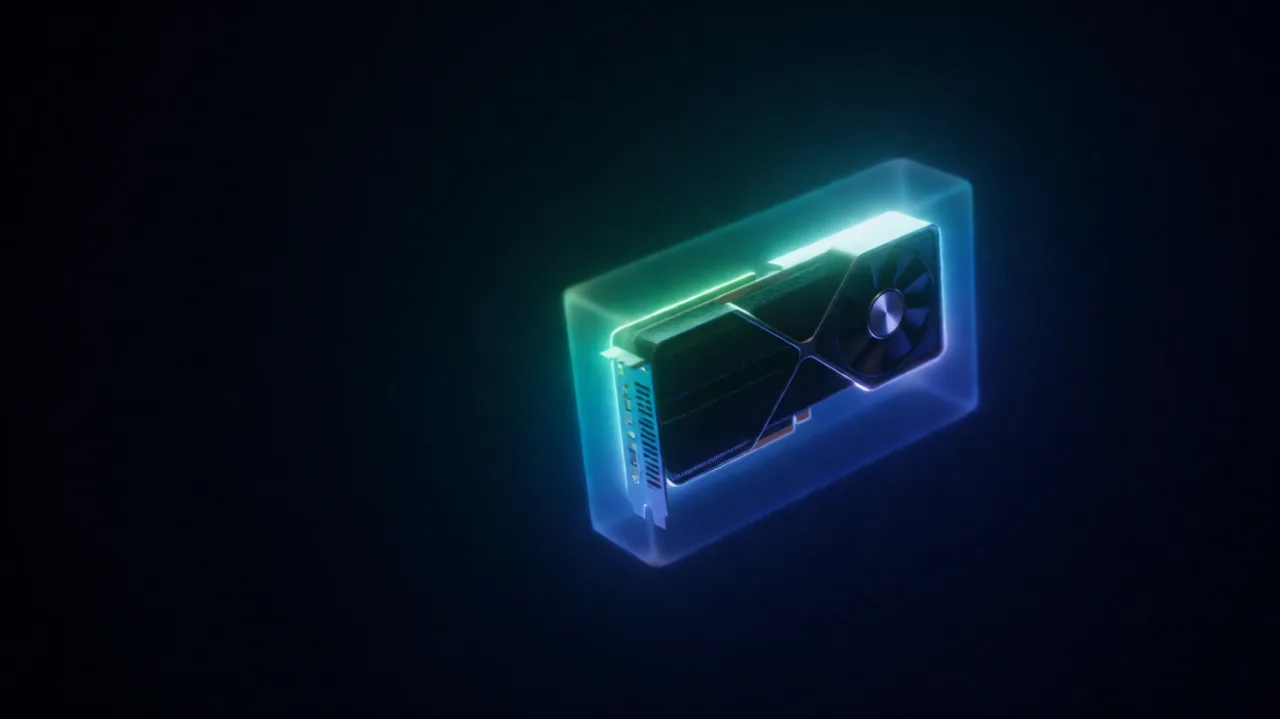
The card is yours, not a slice of it
- 01
Not time-sliced, not shared
Every pod gets whole physical cards. What nvidia-smi reports inside the pod is what you are paying for, for as long as the pod runs.
- 02
You compose the shape
There are no fixed instance SKUs. Pick the GPU model and count, then size vCPU and RAM per GPU — the console bounds every slider by what the live fleet can serve today.
- 03
Ready-made templates, or your own image
JupyterLab, ComfyUI, vLLM, Unsloth and the rest ship with the drivers and the stack already in place. Point at your own container when none of them fit.
- 04
Connected before you ask
HTTPS, SSH and private networking are configured while the pod comes up. There is no ingress to write and no port to forward.
Demand or spot
Every compute SKU carries both. Spot trades the guarantee for the price.
| Demand | Spot | |
|---|---|---|
| Price | Standard rate | Discounted |
| Lifetime | Runs until you stop it | May be reclaimed and reallocated |
| Local volumes | Supported | Not offered — mount a network volume |
| Reach for it when | Services and stateful work | Checkpointed training, batch processing |
Four decisions
- 1Pick a GPU model and count. Both the list and the count ceiling come from the fleet in real time — if the largest host with that card has four, the slider stops at four.
- 2Size the companions. Per GPU the minimum is ⌈VRAM / 4⌉ vCPU and VRAM GB of RAM; the maximum is twice that. Hosts reserve these GPU-first, so the CPU around your GPU is never already sold off.
- 3Add storage. A local volume starts at 10GB and runs to whatever the host has free, or mount a network volume that already holds your data.
- 4Confirm. Eligible hosts are ranked — exact fit first, then lifetime uptime, measured bandwidth, CPU and memory generation, and disk speed as the last tiebreaker.

Pick a card and start the pod
Sign up, choose the GPU, and the pod is yours in under two minutes. It bills by the hour and stops when you stop it.
Already a user? Invite friends and earn 15% of their first top-up.